Gas regulators
A gas regulator, also referred to as a pressure regulator or gas governor, is a precision device designed to control and stabilize the flow of gas from a high-pressure source to a lower, controlled pressure suitable for specific applications. Its primary function is to reduce and maintain gas pressure at a safe, consistent level, ensuring the reliable and efficient operation of downstream systems and equipment. Gas regulators are essential components in a wide range of industries, including manufacturing, medical, laboratory, and energy sectors.
Key Features of Gas Regulators:
- Pressure Control: Accurately reduces high inlet pressure to a stable, lower outlet pressure.
- Safety Assurance: Prevents over-pressurization, protecting equipment and personnel.
- Adjustable Settings: Allows fine-tuning of output pressure based on application needs.
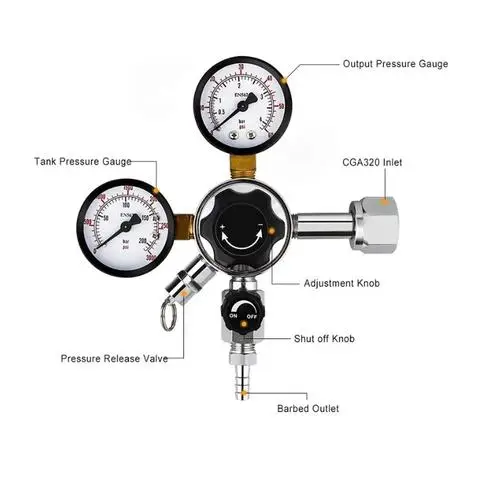
- Pressure Gauges: Equipped with inlet and outlet gauges for real-time pressure monitoring.
- Durable Construction: Made from high-quality materials like brass or stainless steel for long-lasting performance.
What it does:
Reduces Pressure:
Gas regulators decrease the high pressure from sources like gas cylinders, pipelines, or tanks to a lower, more consistent pressure.
Maintains Output Pressure:
They ensure a stable output pressure, even when the incoming pressure fluctuates, which is crucial for consistent performance and safety.
Controls Flow:
They regulate the flow of gas to match the demand of the application.
Safety Mechanism:
Gas regulators often incorporate safety features like relief valves to prevent over-pressurization and potential hazards.
How it works:
Inlet and Outlet Ports:
Gas regulators have an inlet port for the high-pressure gas and an outlet port for the regulated, lower-pressure gas.
Diaphragm:
A flexible diaphragm is a key component. It moves in response to pressure changes, controlling the flow of gas through an orifice.
Spring:
A spring exerts force on the diaphragm, and an adjusting screw allows users to set the desired output pressure.
Single vs. Dual Stage:
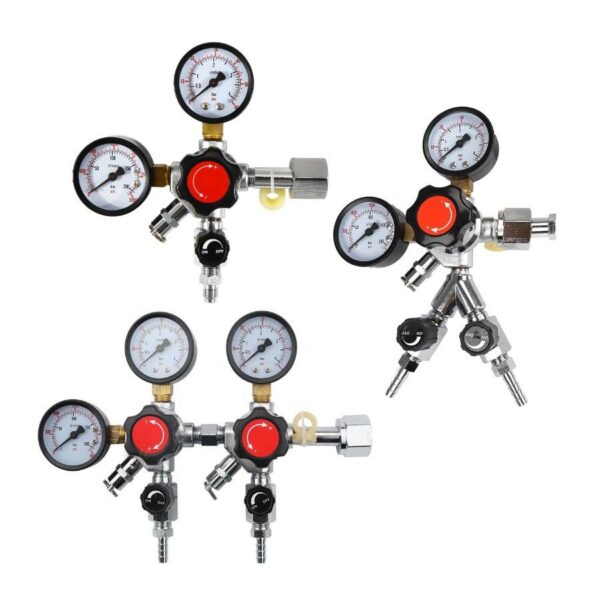
Regulators can be single-stage (reducing pressure in one step) or dual-stage (reducing pressure in two stages).
Common Applications:
Industrial:
Controlling gas flow in manufacturing processes, welding, and various industrial applications.
Commercial:
Regulating gas for heating, cooking, and other commercial uses.
Residential:
Providing a safe and controlled gas supply for home appliances like stoves, furnaces, and water heaters.
Medical:
Delivering precise gas flow for medical equipment like ventilators and oxygen delivery systems.
Other:
Used in laboratories, outdoor cooking equipment, and many other applications where gas pressure needs to be controlled.