
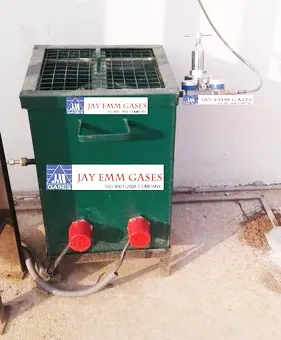
What is a CO2 Vaporizer, and what is it used for?
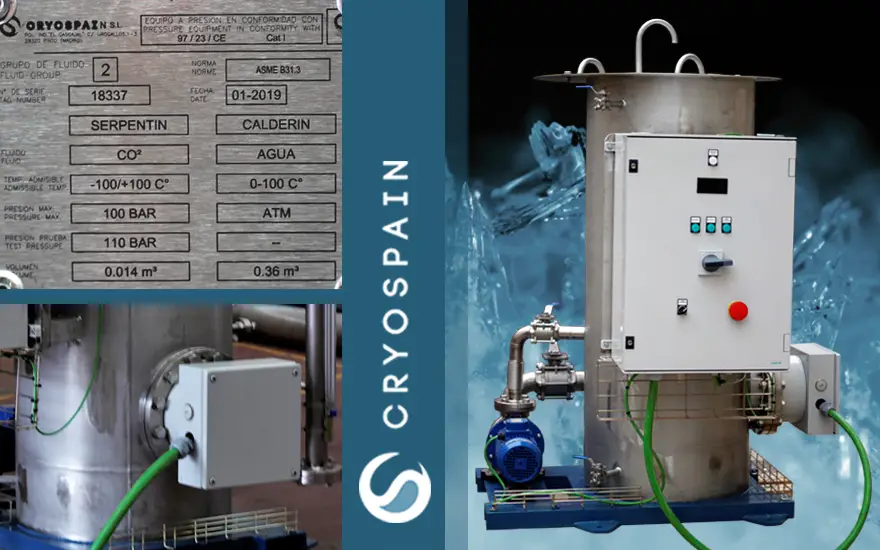
A CO₂ vaporizer is a purpose-built unit that changes liquid carbon dioxide back into gas by carefully applying heat in a controlled exchange. The typical design features a water-circulating heating loop and a shell-and-tube heat exchanger that maximizes heat transfer efficiency. Built for hands-free, dependable performance, these vaporizers find application in a wide range of sectors, from food and beverage and pharmaceuticals to chemical processing and environmental management. They are indispensable wherever gaseous CO₂ is needed for operations involving gas supply for production, preservation, or processing.
There are many uses and applications for CO2 vaporizers, including:
- Rapid CO₂ vaporization for sanitizing food and beverage equipment.
- Preserving food by using CO₂ to slow spoilage and maintain quality.
- Supporting soft drink production with consistent CO₂ carbonation.
- Converting CO₂ for safe, efficient cylinder filling and transport.
- Supplying CO₂ blends for welding to enhance arc stability and protection.
Technical information about CO2 vaporizers
2 Types of CO2 vaporizers:
The first type features electric heating elements that are directly exposed to the gas stream, transferring heat straight to the CO2.
The second type encloses the heating elements within a water jacket, where the cold gas is warmed by either the water or the steam, allowing the heat to transfer more indirectly.
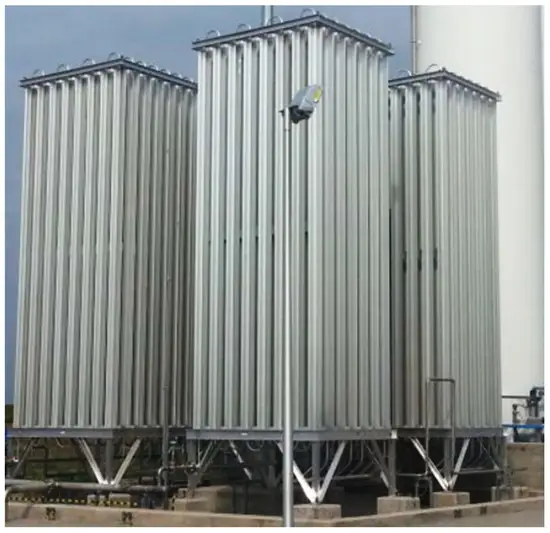
JAY EMM GASES provide full range of cryogenic vaporizers offer solutions across the broad spectrum of air gases, LNG, CO2, helium and hydrogen. we provide the vaporizing solution that fits the demand of your site.
Ambient Air Vaporizers: high performance ambient vaporizers provide zero cost heating for a huge variety of liquid gases and cryogens.
Components in CO2 vaporizers
Some of the common elements for control and instrumentation of a CO2 vaporizer include:
- Temperature switch
- Pressure switch
- Shut-off valve
- Safety valve
Legal requirements
Any CO2 vaporizer must be designed to comply with national and international standards and regulations that might be applied in each territory.
For instance, companies using these devices in European territory must be prepared to comply with PED 2014/68/EU. The Pressure Equipment Directive (PED) was created to generate standards for the design, manufacture and conformity assessment of stationary pressure equipment with a maximum allowable pressure greater than 0,5 bar. This directive, which entered into force in 2016, thus guarantees the free movement of these products while also ensuring a high level of safety.
Power in CO2 vaporizers
CO2 vaporizers’ power might range from 30KW to 100KW, depending on their intended use.
Tailored solutions
Selecting a CO2 vaporizer can be a very precise exercise when you can order a product specifically shaped to the client’s environmental and operational realities. From the initial concept to the finished unit, Cryospain engineers the bespoke CO2 liquid vaporizer that will perform exactly to the client’s brief. Our process centers on customizing the dimensions and layout to the user’s space, and also on tailoring the vaporizer’s output capacity to the operational profile—whether the preference is for fully manual, semi-automatic, or fully automated control.
Alternatives or complementary systems to a CO2 vaporizer
There are alternative solutions to CO₂ vaporizers, though their suitability may vary based on specific operational requirements and applications. Ambient vaporizers, for example, can perform similar functions by utilizing natural air convection to convert liquid CO₂ into gas. However, they are generally limited to operating temperatures around -20ºC, making them less suitable for processes requiring precise or higher temperature control.
In addition to alternatives, several complementary products can enhance the efficiency of CO₂ vaporizers. One such product is the gas cylinder filling rack, which is often used in conjunction with the vaporizer for streamlined gas transfer and storage operations. Selecting the appropriate equipment depends on the company’s needs, safety standards, and the scale of application.